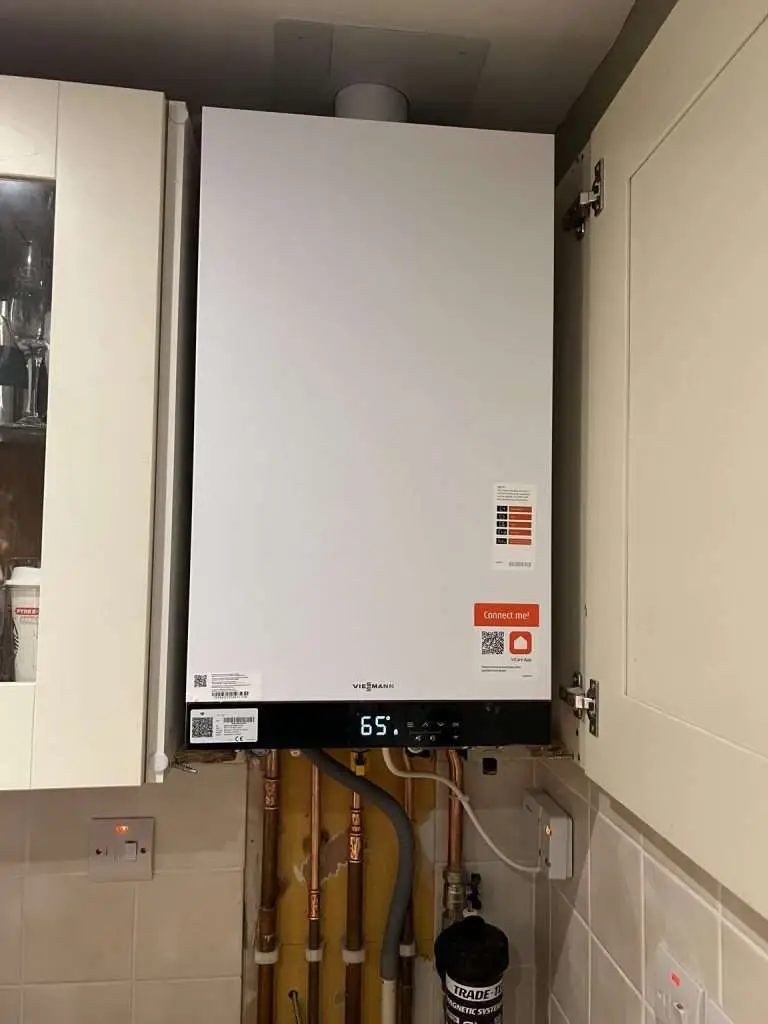
Frozen Condensate Pipe: How to Thaw It Safely and Get Your Heating Back
Quick answer: If your boiler has stopped during a freeze and is showing a fault, the condensate pipe has probably frozen. Find the white plastic pipe that runs from the boiler to a drain outside, pour warm (not boiling) water slowly along the frozen section, then reset the boiler following its manual. Most people can do this themselves in ten minutes, as long as the pipe is at ground level and safe to reach.
Right, so when the first proper frost hits Bath, this is one of the calls I get most. The heating’s gone off, the boiler’s flashing a code, and people assume the worst. Honestly, don’t panic. Nine times out of ten it’s a frozen pipe outside, not a broken boiler.
In this guide:
- What a condensate pipe is
- Signs it’s frozen
- How to thaw it safely
- What not to do
- If the boiler still won’t start
- How to stop it happening again
- FAQs
What is a condensate pipe?
Modern boilers are condensing boilers. They squeeze extra heat out of the exhaust gases, and that produces water (condensate), a bit like the drips on a cold window. The condensate pipe carries that water away, usually to a drain outside or into a waste pipe indoors.
When the pipe runs outside, the water sitting in it can freeze in sub-zero weather. Ice blocks the pipe, water backs up into the boiler, and the boiler shuts itself down to protect itself. It’s doing exactly what it should.
Signs your condensate pipe is frozen
- The boiler has stopped during freezing weather, often overnight or first thing in the morning
- A fault code or flashing light on the boiler
- A gurgling or bubbling noise from the boiler or the pipe
- The boiler tries to start, then locks out again after you reset it
- Ice visible at the end of the pipe outside
If it’s freezing out and you tick two or three of those, the condensate pipe is the first thing to check.
How to thaw a frozen condensate pipe safely
- Find the pipe. Follow the white plastic pipe from the bottom of the boiler to where it leaves the house. Outside, it usually runs down the wall to a drain or into the ground.
- Find the frozen bit. It’s usually the end of the pipe, a bend, or any dip where water sits. These are the coldest, most exposed parts.
- Use warm water. Fill a kettle, let it cool for a bit so it’s warm rather than boiling, and pour it slowly along the frozen section. A watering can or jug works well. It can take a few goes.
- Or use a hot water bottle or a heat pack held against the pipe, if you’d rather not pour water.
- Watch your footing. The water you pour will freeze on the ground, so put some grit or salt down on the spot afterwards.
- Reset the boiler once the pipe is clear. Follow the reset instructions in your boiler’s manual, as it varies between makes. It may take a couple of minutes to fire up again.
If it fires up and stays on, you’re sorted. Keep the heating on low through the cold snap so the pipe gets warm water passing through it regularly.
What not to do
- Don’t use boiling water. It can crack the plastic pipe or its joints, and then you’ve got a leak on top of the freeze.
- Don’t pour water on electrics or near the boiler itself. Only on the pipe outside.
- Don’t climb a ladder on ice to reach a pipe high up the wall. Not worth it. Call someone.
- Don’t take the boiler casing off. Anything inside the boiler is a job for a Gas Safe engineer.
- Don’t keep resetting it over and over. If it locks out two or three times, something else is going on.
Pipe out of reach, or still no heating? WhatsApp us a photo of the pipe and the boiler display, or call 01225 970248. If it’s something you can sort yourself, I’ll tell you how.
If the boiler still won’t start
If you’ve thawed the pipe, reset the boiler and it still locks out, it might not be the condensate after all. Other cold-weather culprits:
- Low pressure. Check the gauge reads 1 to 1.5 bar when cold. If not, top it up. See my guide on a boiler losing pressure.
- The condensate trap inside the boiler is blocked or still frozen. That’s a boiler-open job for an engineer.
- A different fault that just happened to show up on a cold day, which is when boilers work hardest.
At that point it’s time to get an engineer out. Our call-out is £95 + VAT (£114 including VAT), which covers the first hour, and you get a fixed price for any repair before any work is done.
My guide on a boiler not working goes through the other common causes.
How to stop it happening again
If yours freezes every winter, it’s usually down to how the pipe was fitted. Things that help:
- Lagging. Insulating the outside section with weatherproof pipe insulation.
- A wider pipe. Guidance says a condensate pipe running outside should be at least 32mm in diameter, as wider pipes are much harder to block with ice. Lots of older installs used a narrow pipe all the way.
- A shorter run outside, or re-routing it to an internal waste pipe so it never goes outside at all.
- No dips or sags where water can sit and freeze.
These are usually quick jobs, and a good one to ask about when your boiler’s in for its service.
Frozen condensate pipe FAQs
Can I use boiling water to thaw a condensate pipe?
No. Use warm water, not boiling. Boiling water can crack plastic pipes and joints.
How long does it take to thaw a frozen condensate pipe?
Usually a few minutes with warm water, sometimes longer if a long section has frozen. It can take a few goes.
Is a frozen condensate pipe dangerous?
The pipe itself isn’t dangerous. The boiler shuts down to protect itself, which is a safety feature. The real risk is being without heat in freezing weather, so if there’s someone elderly or vulnerable in the house, get help quickly.
Will my boiler be damaged by a frozen condensate pipe?
Normally not. Once the pipe is thawed and the boiler reset, it should run as normal. If it keeps locking out, get it checked.
How do I stop my condensate pipe freezing?
Insulate the outside section, make sure it’s a wide enough pipe with no dips, keep the run outside short, or have it re-routed indoors. Keeping the heating on low in a cold snap helps too.
If you’re stuck with no heating in a cold snap, I’ll tell you straight whether it’s something you can sort yourself or something I need to come and look at. Cheers.
WhatsApp Bath Eco Heat or call 01225 970248.