Why Does My Boiler Keep Losing Pressure? (Common Causes & Easy Fixes)
Quick answer: If your boiler keeps losing pressure, it’s almost always one of three things — a small leak somewhere in the system, air being released after you’ve bled the radiators, or a failed part inside the boiler (usually the expansion vessel or the pressure relief valve). A one-off drop you can top back up yourself in two minutes. If it keeps dropping again and again, something’s wrong and it needs looking at.
Right, so let’s go through it properly.
In this guide:
- What your pressure should be
- Why boilers lose pressure
- What you can safely check
- When to call an engineer
- Why it happens more in Bath
- FAQs
What should my boiler pressure be?
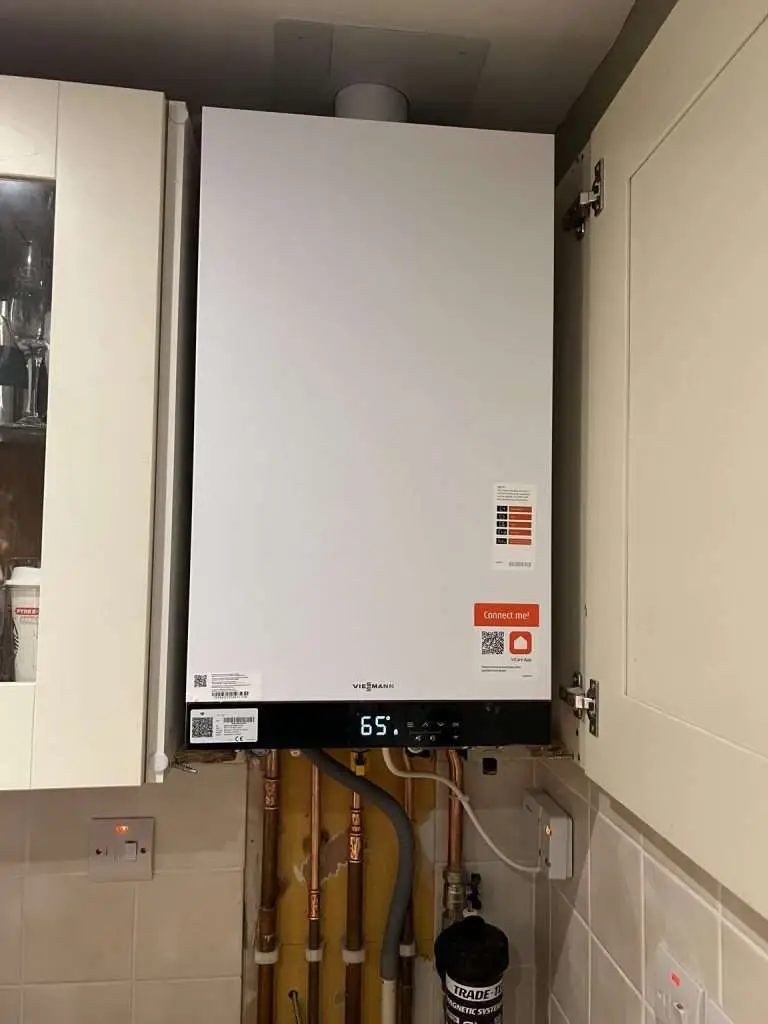
Most boilers want to sit between 1 and 1.5 bar when the heating is cold. You’ll see it on the gauge on the front of the boiler — either a round dial or a digital readout.
| Gauge reading (cold) | What it means |
|---|---|
| Below 1 bar (often in the red) | Too low — the boiler may lock out and stop heating |
| 1 to 1.5 bar | That’s the sweet spot |
| Creeping above 2.5–3 bar when hot | Too high — usually the filling loop left open or a faulty expansion vessel |
If your needle’s dropped into the low red zone, that’s what people mean when they say the boiler’s “losing pressure.”
Why is my boiler losing pressure? The common causes
1. A leak somewhere in the system
This is the most common one. Water is escaping, so the pressure drops. It doesn’t take much.
Have a look around your radiators, pipe joints, and under the boiler for any damp patches, drips, or little rusty stains. In a lot of the older Bath stone houses I work in, the pipework runs under floorboards or behind panels, so a slow leak can be hidden for ages — you’ll see the pressure dropping long before you ever see a drip.
2. You’ve recently bled your radiators
If you’ve just bled the rads to get rid of cold spots, that releases trapped air — and that drops the pressure. This one’s completely normal. Just top the boiler back up and you’re sorted.
3. A faulty expansion vessel
Inside your boiler there’s an expansion vessel that absorbs the extra pressure as water heats up. When it fails, the pressure swings all over the place — fine when cold, shoots up when hot, then drops again. This one’s a job for a Gas Safe engineer — it’s a boiler-open repair, not a DIY one.
4. A failed pressure relief valve (PRV)
This valve dumps water outside if the pressure gets too high. When it sticks or fails, it can let water out slowly even at normal pressure. The tell-tale sign is dripping from a small pipe sticking out through your external wall. Again, that’s a boiler repair job, not one to attempt yourself.
What you can safely check (and fix) yourself
Before you call anyone, here’s what’s fair game for a homeowner:
- Check the gauge when the heating’s been off for a while (a cold reading is the honest one).
- Top the pressure back up using the filling loop — that’s the little silver braided hose or lever under the boiler. Open it slowly, watch the gauge climb to 1.5 bar, then close it. There are loads of model-specific guides, so check yours if you’re unsure.
- Have a quick look for obvious damp patches around rads and under the boiler.
- Bleed your radiators if they’ve got cold tops — then re-top the pressure.
When to stop and call an engineer
Don’t wrestle with it if:
- You top it up and it drops again within a day or two — that means there’s a leak or a failed part.
- You can see water dripping from a pipe outside the house.
- The pressure shoots up high when the heating’s on, then falls.
- You can’t find the filling loop, or you’re just not comfortable — no shame in that.
Honestly, don’t panic with any of this. Nine times out of ten a boiler losing pressure is a small, cheap fix, not a new boiler. I’ll always be straight with you about which it is.
Need some advice? Not sure if it’s something you can fix yourself? Give Bath Eco Heat a call on 01225 970248 or send us a WhatsApp message. We’re always happy to point you in the right direction — no obligation, no hard sell.
Why does this happen more in Bath homes?
Bath’s on hard water, and over the years that scale builds up inside the system and around valves and seals. That scale wears parts out a bit quicker, which is why expansion vessels and valves give up the ghost. A lot of Bath properties are also older, with original pipework that’s seen better days — older than me in some cases — so joints can weep over time.
It’s nothing to be alarmed about, it’s just the nature of the houses round here. A proper annual service and the right inhibitor in the system keeps it all running sweet.
Frequently asked questions
Is it safe to use my boiler if it keeps losing pressure?
A one-off low reading isn’t dangerous, just top it up. But if it keeps dropping, you’ve got a leak or a faulty part, and it’s worth getting it looked at before it gets worse or leaves you with no heating.
How often should I have to top up my boiler pressure?
Once or twice a year is normal. If you’re topping it up every week, that’s not normal and something needs fixing.
Can I top up the boiler pressure myself?
Yes, most people can. Find the filling loop under the boiler, open it slowly until the gauge reads about 1.5 bar, then close it. If you can’t find it or it doesn’t hold, give me a ring.
Why does my pressure go up when the heating is on?
That’s normal to a point, as water expands when it heats. But if it climbs towards 3 bar then drops back down, that usually points to a failed expansion vessel.
How much does it cost to fix a boiler losing pressure?
It depends on the cause. Topping up is free and takes a minute. Fixing a leak, expansion vessel or pressure relief valve is a straightforward repair in most cases, far cheaper than a new boiler.
Does a boiler losing pressure mean I need a new boiler?
Almost never. In the vast majority of cases it’s a leak, a tired expansion vessel or a pressure relief valve, all straightforward repairs.
Will my service plan or boiler warranty cover a pressure fault?
Often, yes. Many pressure faults are covered under a manufacturer warranty or care plan, provided the boiler has been serviced regularly. Check your paperwork or ask your engineer to confirm.
Still losing pressure? Let’s sort it.
If you’ve topped it up and it’s dropping again, don’t keep fighting with it — that usually means a leak or a worn part that needs a proper fix. I’m a local Bath heating engineer, I’ll turn up when I say, do clean work, take my boots off at the door, and be straight with you about what it needs.
Call 01225 970248 or WhatsApp Bath Eco Heat. We’re always happy to help homeowners across Bath and the surrounding areas.