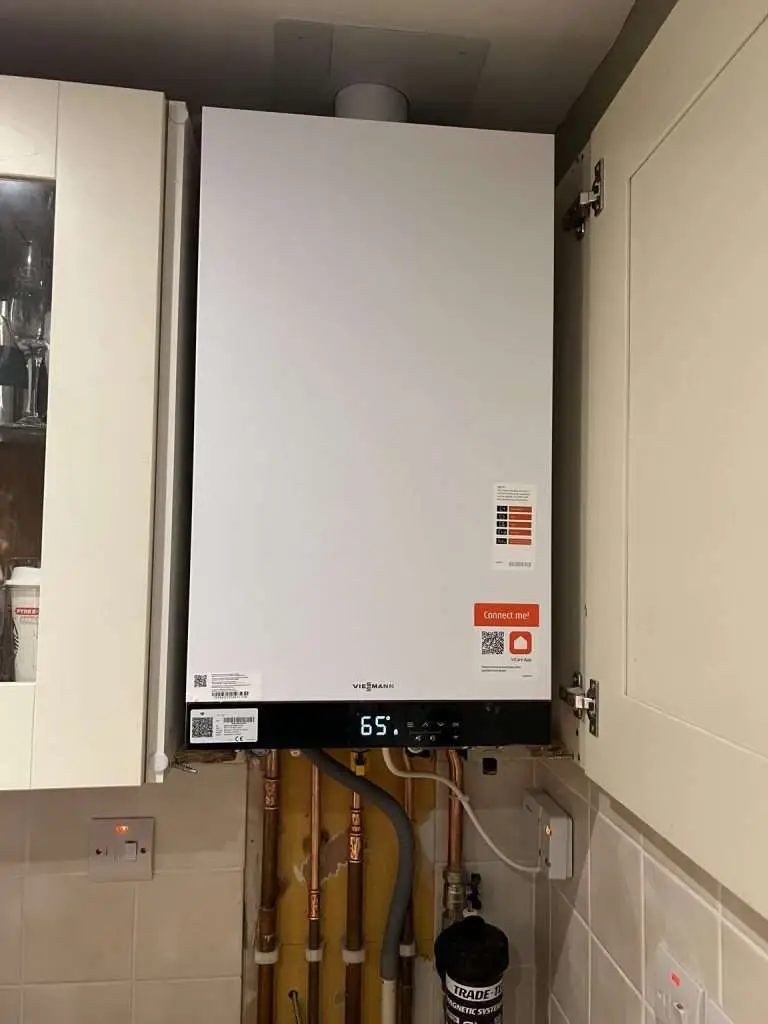
Boiler Not Working — No Heat or Hot Water? Here’s What to Check First
Quick answer: If your boiler’s stopped working completely, it’s usually one of a handful of things — low pressure, a tripped switch, a frozen condensate pipe, a dead thermostat, or the boiler’s simply locked out and needs resetting. Most of these you can check yourself in five minutes. If you’ve checked the obvious things and you’re still stood there with no heat or hot water, it’s time to call an engineer.
Right, let’s work through it properly.
In this guide:
- Why your boiler’s stopped working
- What you can safely check
- When to call an engineer
- If you smell gas
- Why it happens more in Bath
- FAQs
Why has my boiler stopped working? The common causes
1. Low pressure
If the pressure’s dropped below about 1 bar, a lot of boilers will just refuse to fire. It’s the single most common reason I get called out to a “dead” boiler that turns out to be a two-minute fix. I’ve written a full guide on why boilers keep losing pressure if you want the detail — worth a read either way.
2. It’s locked out
Boilers protect themselves by locking out when something’s not right — low pressure, an ignition fault, overheating. You’ll usually see a fault code or a flashing light on the display. A lot of the time a single reset clears it. If it locks out again straight after, that’s telling you something, and repeatedly hammering the reset button won’t fix it.
3. No power
Sounds obvious, but it’s more common than you’d think. Check the fused spur switch near the boiler (it’s easy to knock off without noticing), and check your consumer unit for a tripped RCD switch. If the display’s completely blank, this is where I’d look first.
4. Frozen condensate pipe
In a proper cold snap, the plastic pipe that carries condensation away from the boiler can freeze, especially if it runs outside. When it’s blocked, a lot of modern condensing boilers will lock out rather than risk damage. This one genuinely is DIY-fixable in most cases — more on that below.
5. Thermostat issue
Dead batteries, a wrong schedule, or the thermostat’s just been knocked into the wrong mode. Worth ruling out before you assume it’s the boiler itself.
6. Gas or fuel supply
If you’re on a prepayment meter and it’s run out, or there’s a wider gas supply issue, the boiler obviously won’t fire. Check your meter and see if other gas appliances in the house are working too.
What you can safely check first
Before you call anyone, it’s worth two minutes running through this:
- Check the pressure gauge — if it’s in the red, top it up via the filling loop. See our full pressure guide if you’re not sure how.
- Check the display for a fault code — even if you don’t know what it means, it tells an engineer a lot before they’ve even arrived.
- Check the power — fused spur switch, and your consumer unit for a tripped RCD.
- Check the thermostat — batteries, mode, and that it’s actually calling for heat.
- Try one reset — following the instructions for your specific boiler. One press, then wait. Don’t keep mashing the button.
- Check for a frozen condensate pipe if it’s been below freezing — see below.
Thawing a frozen condensate pipe yourself
If you can safely reach the pipe (it’s usually a grey plastic pipe running down an outside wall) and it’s obviously frozen:
- Pour warm — not boiling — water over the frozen section, working from the boiler end down.
- Reset the boiler once it’s thawed.
- Lag the pipe afterwards (foam pipe insulation from any hardware shop) so it doesn’t freeze again next cold snap.
If the pipe’s not reachable, or this doesn’t fix it, that’s an engineer job.
When to stop and call an engineer
- You’ve checked pressure, power, and thermostat, and there’s still nothing.
- The boiler resets, then locks out again within minutes.
- You can’t find or reach the frozen pipe.
- There’s an error code you don’t recognise and a reset hasn’t cleared it.
- Anything smells off, sounds wrong, or you’re just not comfortable — never a problem calling, that’s what I’m here for. See our boiler repairs in Bath page for how we work and what a call-out costs.
Need some advice? Not sure if it’s something you can check yourself, or you’ve been through this list and you’re still stuck? Give Bath Eco Heat a call on 01225 970248 or send us a WhatsApp message. We’re always happy to talk it through before you commit to a call-out.
If you smell gas — stop, and do this
This is the one situation where the checklist above doesn’t apply. If you smell gas:
- Turn off the gas supply at the meter if it’s safe to reach.
- Don’t use any switches, naked flames, or your phone in the room.
- Open windows and doors, get out of the house.
- Call the National Gas Emergency Service on 0800 111 999 immediately — they’re free, 24/7, and that’s who you call before anyone else, including us.
Once it’s safe, give us a call and we’ll take it from there. This is rare, but it’s the one thing in this whole article worth memorising rather than checking back.
Why does this happen more in Bath homes?
Older Bath properties — Georgian terraces, Victorian conversions, a lot of loft extensions — often have pipework running through cold, poorly-insulated spaces: lofts, external walls, converted outbuildings. That’s exactly where a condensate pipe is most likely to freeze in a hard frost, and it’s why I see a spike in “boiler’s just stopped” call-outs across Bath every time there’s a proper cold snap. Combined with the hard water here quietly wearing down components over the years (see our pressure loss guide for more on that), older systems in this area are just more prone to the kind of fault that causes a sudden lockout.
If you’re renting or managing a period property in Bath, it’s also worth knowing that a lot of these faults are exactly what an annual boiler service catches before they become a no-heat emergency in January.
Frequently asked questions
Why has my boiler suddenly stopped working?
Nine times out of ten it’s one of: low pressure, a lockout after a minor fault, no power to the unit, a frozen condensate pipe, or a dead thermostat. All of these are quick to check yourself before assuming the worst.
Is a boiler not working an emergency?
It depends. No heat and no hot water in winter, especially with vulnerable people in the house, is urgent and we’ll treat it that way. A single missed shower on a mild day isn’t the same kind of emergency — but we’re happy to help either way.
Can I reset my boiler myself?
Yes, one reset is fine and often clears a minor lockout. If it locks out again straight after, stop resetting it and get it looked at — repeatedly resetting can mask a fault that needs proper diagnosis.
What should I do if I smell gas?
Turn off the supply at the meter if safe, don’t use switches or naked flames, get out, and call the National Gas Emergency Service on 0800 111 999 straight away. Call us after that’s dealt with.
Why do I have heating but no hot water (or the other way round)?
That usually points to a specific component — often a diverter valve on a combi boiler — rather than the whole system being down, which is actually a good sign. It’s still worth getting looked at rather than living with it.
How much does it cost to fix a boiler that’s stopped working?
It depends entirely on the cause — a pressure top-up or a frozen pipe thaw can be sorted very cheaply, while a component failure is a bigger job. I’ll always give you an honest, fixed price before any work starts, no surprises on the day.
Is it dangerous to leave my boiler off in winter?
For a day or two, no — just uncomfortable, and worth keeping an eye on for frozen pipes elsewhere in the house. Longer than that, especially in a cold snap, it’s worth prioritising a fix or a temporary heater to avoid pipes freezing and bursting elsewhere in the property.
Still no joy? Let’s get it sorted.
If you’ve been through this list and you’re still stood there with no heat or hot water, don’t keep fighting with it — especially in winter, that’s not something to sit on. I’ll get to you as quickly as I can, tell you honestly what’s wrong, and give you a fixed price before I start.
Call 01225 970248 or WhatsApp Bath Eco Heat. We’re always happy to help homeowners across Bath and the surrounding areas.