
Air Source Heat Pumps in Bath
Straight answers from local Bath engineers. We install heat pumps through Viessmann’s MCS-accredited process — so eligible customers get the full £7,500 government grant — and we’ll tell you what one really costs, whether it’ll be cheaper to run than your gas boiler, and honestly whether your home is right for one. If it isn’t, we’ll say so.
Installed via Viessmann’s MCS-accredited process · Gas Safe 622049 · £7,500 grant process managed for you · Free home survey · No-pressure promise
Not sure whether a heat pump is right for your home?
Talk to Bath Eco Heat about your property and what you want to achieve.
What does an air source heat pump cost in Bath?
Installed prices for a typical Bath home usually land between £9,000 and £14,000 depending on the size of your property, how many radiators need upgrading, and where the outdoor unit and hot-water cylinder go. The government’s Boiler Upgrade Scheme then takes £7,500 straight off — and because we deliver your installation through Viessmann’s MCS-accredited process, that discount comes off your price at the point of sale. You don’t pay it upfront and claim it back later.
Figures are a guide, not a quote. Your survey gives you one fixed price with nothing hidden. The Ofgem-reported UK average install is around £12,500 for a standard 8kW system (early 2026).
What’s included in our price: the heat pump, hot-water cylinder, any radiator upgrades your system needs, all pipework and controls, commissioning, and the MCS certificate — issued through Viessmann’s accredited process — that you need for the grant and for your warranty. No surprise extras on the day.
The £7,500 Boiler Upgrade Scheme grant, explained plainly
The Boiler Upgrade Scheme (BUS) is the government grant that knocks £7,500 off an air source heat pump. It’s confirmed and running right now. We manage the grant process from start to finish through Viessmann’s MCS-accredited installation route, so you don’t have to deal with the paperwork — and the £7,500 comes straight off your price rather than being something you chase later.
Do you qualify? Most Bath homeowners do
You’ll almost certainly be eligible if:
- You own your home (or a small business premises) in England or Wales
- You’re replacing a gas boiler, oil boiler, LPG or electric heating — not an existing heat pump
- The property isn’t a new build or social housing (self-builds do qualify)
- Your installation is certified through the MCS scheme via Viessmann’s MCS-accredited process — which is exactly how we deliver every heat pump, via Viessmann’s MCS-accredited process
There’s one grant per property, and the system has to meet the scheme’s efficiency standards. Delivering your install through Viessmann’s accredited process is how we make sure it does — and it’s what unlocks your £7,500.
Want the full detail? We’ve written a plain-English guide to the grant — what it covers, who qualifies, and when a heat pump isn’t worth it: the £7,500 heat pump grant, explained.
Heat pump vs gas boiler: will it actually be cheaper to run?
This is the question everyone really wants answered, so here’s the honest version. A heat pump turns one unit of electricity into three or four units of heat, so it’s far more efficient than a boiler. But electricity costs more per unit than gas — so whether it works out cheaper depends heavily on the tariff you’re on and how well the system is set up. On a standard electricity tariff you might only break even with a modern gas boiler. On a dedicated heat-pump tariff, for most homes, it gets genuinely cheaper.
What actually drives your running costs
Four things make the biggest difference: how well your home holds heat (insulation), the flow temperature we can run the system at, whether your radiators are sized to give out heat at that lower temperature, and the electricity tariff you choose. Get those right and a heat pump runs cheaply and steadily. Get them wrong — an under-insulated home, undersized radiators, or a standard tariff — and the savings shrink or disappear. That’s exactly what our survey works out for your home before you commit.
The tariff makes the difference
The clearest independent data comes from Octopus. At 2026 prices, around 95% of their heat-pump customers on a dedicated heat-pump tariff (like Cosy Octopus) heat their home for less than they would with a gas boiler — saving a couple of hundred pounds a year on average. We won’t promise you’ll save money, because it genuinely depends on your home and how you run it. What we will do is size the system properly and point you at the tariff that suits how you actually live.
Which homes benefit most
Heat pumps pay off most in homes that are reasonably well insulated, where we can run low flow temperatures into correctly sized radiators or underfloor heating, and where you’re happy to move to a heat-pump tariff. If your home is hard to insulate or you’d rather stay on a standard tariff, a heat pump may only match your gas bills rather than beat them — and we’ll tell you that straight at the survey rather than overpromise.
Figures are typical estimates for a 3-bed Bath home using around 6,600 kWh of heat a year; your own costs depend on insulation, system design, tariff and how you use it. Your survey includes a running-cost estimate for your specific home.
How an air source heat pump heats your home
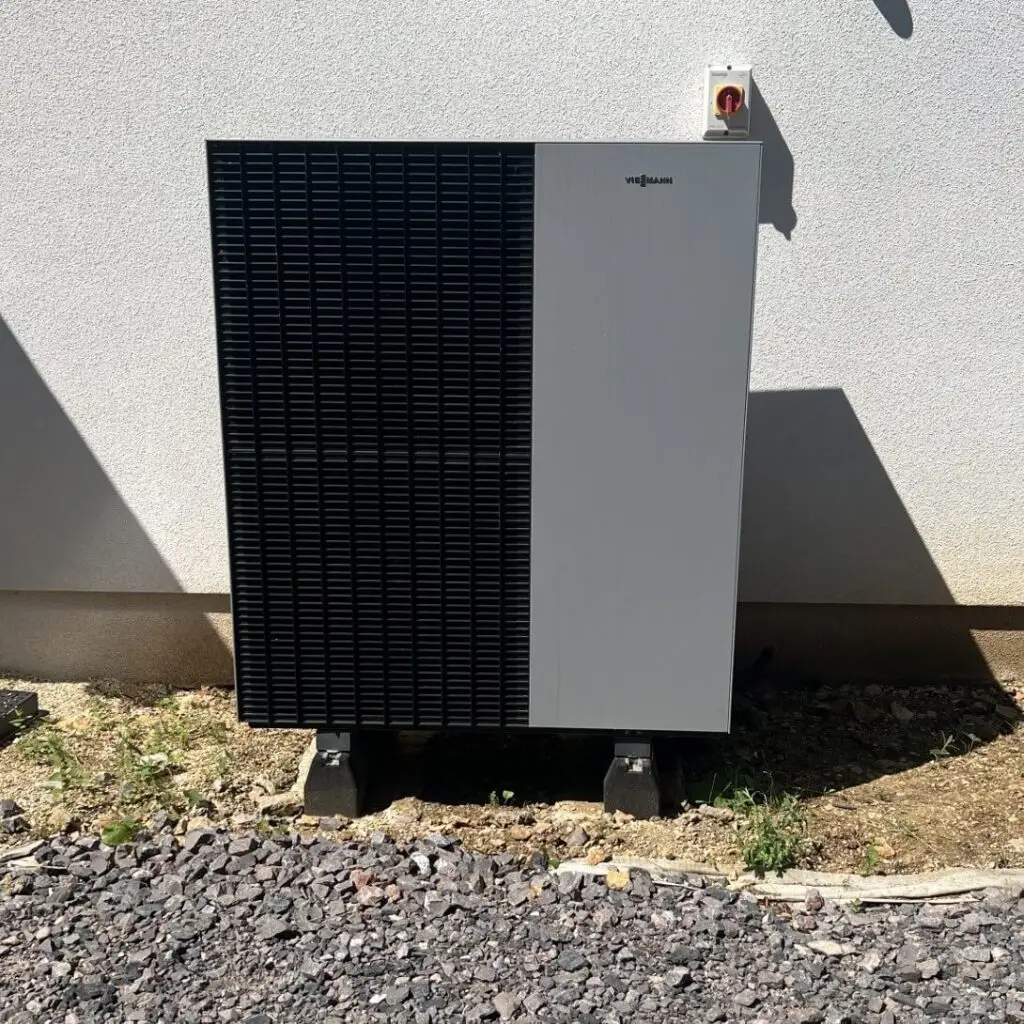
A heat pump works a bit like a fridge in reverse. A unit outside your home pulls warmth out of the outside air — and there’s usable heat in that air even on a cold Bath morning, well below freezing. It concentrates that warmth with a compressor and passes it to your radiators, underfloor heating and hot-water cylinder.
Because it’s moving existing heat rather than burning fuel to create it, a heat pump gives you three to four units of heat for every unit of electricity it uses. That efficiency is where the lower running costs come from — and it’s why the system has to be matched properly to your home’s heat loss and radiators. Sized and set up right, it delivers steady, even warmth, without the on-off blasts you get from a gas boiler.
Will a heat pump work in my Bath home?
It’s the question we get most, and it matters more here than almost anywhere. Bath is full of Georgian and Victorian stone terraces, solid-wall cottages, converted townhouses and listed buildings — and plenty of people have been told heat pumps “don’t work” in older homes. That’s too blunt to be true. The honest answer is: often yes, sometimes not yet, and it comes down to your specific property.
Common myths about heat pumps in older homes
“They don’t work in old houses.” They can — they just need proper design. A heat pump heats gently and steadily at a lower temperature than a boiler, so in a solid-wall home it takes the right-sized unit and a bit of thought, not magic.
“You’ll have to rip out every radiator.” Usually not. Some radiators may need upsizing to give out heat at a lower flow temperature; plenty are fine as they are. We tell you exactly which.
“It won’t keep an old house warm in winter.” A correctly sized heat pump is designed for the coldest Bath mornings — there’s usable heat in the air even below freezing. Sizing is what matters, and that’s what the survey is for.
When a heat pump is a good fit
Your home is a strong candidate if it’s reasonably insulated (or can be), there’s a sensible spot outside for the unit, room for a hot-water cylinder, and you’re happy with steady, even heat rather than short hot blasts. Plenty of Bath period homes tick these boxes once the details are right.
When it might not be the right choice — yet
Sometimes the honest answer is “not right now.” If your home is very hard to insulate with no realistic scope to improve it, there’s nowhere sensible for the outdoor unit, listing or conservation rules block a workable install, or your budget is better spent elsewhere this year, we’ll say so. In those cases a modern high-efficiency gas boiler may be the smarter move for now — and we fit those too.
Radiators and insulation — the honest version
Two things help a heat pump run cheaply in an older home: radiators sized for lower temperatures, and a home that holds its heat. In practice that might mean upsizing a few radiators (rarely all of them), topping up loft insulation, and draught-proofing. We’ll flag what’s genuinely worth doing for your home — and nothing that isn’t. No blanket “you need everything replaced” scare tactics.
Why a proper survey matters
None of this can be judged from the doorstep. We calculate your home’s actual heat loss, look at your radiators and pipework, check where the unit and cylinder would go, and factor in any conservation constraints. Then we tell you straight whether a heat pump is right for your home — and if it isn’t, we’ll say so and point you to the better option.
Why some heat pumps fail
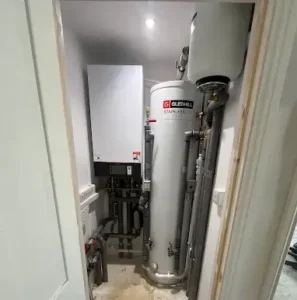
- Incorrect sizing
- Radiators not upgraded where needed
- Poor setup and no proper handover
- No aftercare
We design systems to avoid these problems from the start and are available to answer any questions.
How we install your heat pump — start to finish
1. Free home survey
We come to you, measure up properly, and calculate your home’s real heat loss. No guesswork, no obligation.
2. Clear, fixed quote
You get one honest price with the £7,500 grant already taken off, a running-cost estimate for your home, and a plain explanation of what we’d fit and why.
3. Design and grant paperwork
We size the system, plan radiator and cylinder placement, and manage the Boiler Upgrade Scheme process from start to finish through Viessmann’s MCS-accredited route — so the paperwork isn’t your problem.
4. Installation
Most installs take two to four days depending on the property. We keep the place tidy, keep you in hot water where we can, and keep you informed each day.
5. Commissioning and handover
We set the system up to run efficiently, walk you through the controls and the best tariff for your home, and leave you with your MCS certificate (issued through Viessmann’s accredited process) and warranty.
6. We don’t disappear
You’ve got our number afterwards. If anything needs tweaking as the seasons change, we’re a local Bath call away — not a national helpline. A proper handover and an annual service keep your system running efficiently for the long term.
What success looks like
Even warmth
Comfortable, steady heat throughout your home.
Lower, predictable energy bills
Efficient running cost without constant tweaking.
Confidence
You know your system is right for your home.
Why we fit Viessmann heat pumps
We could fit any brand. We choose to install Viessmann — and it’s worth explaining why, because the manufacturer behind your heat pump matters as much as the engineer fitting it.
A proper manufacturer, not a badge
Viessmann is one of the biggest heating manufacturers in the world, with over a century of building boilers and heat pumps. Buy a Viessmann system and you’re backed by a serious manufacturer that will still be here in ten years — not a small brand that might not be.
Reliability that’s designed in
Heat pumps run day in, day out for 15–20 years, so build quality isn’t optional. Viessmann’s Vitocal air source range is engineered to run efficiently and quietly through a full British winter, year after year — fewer callouts, fewer headaches.
Parts you can actually get
A heat pump is only as good as the support behind it. Viessmann parts are widely stocked in the UK, so on the rare occasion something needs replacing we’re not waiting weeks for an obscure component from abroad — less downtime, heat back on faster.
Strong manufacturer-backed warranties
Because we install through Viessmann’s accredited route, your system comes with a solid manufacturer warranty. Keep up the annual service and you’re covered for the long haul.
Why we don’t just fit whatever’s cheapest
Plenty of installers fit whatever brand gives them the best margin that week. We don’t. We picked one manufacturer we trust and got properly accredited with them, so we know the kit inside out, install it to the standard the grant requires, and stand behind every system we put in. One brand, done properly, beats five done half-heartedly.
You're right to be cautious
Heat pumps get a bad name from poor design and rushed installations — not the technology itself. Our plain-English guide walks you through what actually matters before you commit.
Heat pump questions, answered straight
How much does a heat pump cost?
Most Bath homes pay between £1,500 and £6,500 after the £7,500 Boiler Upgrade Scheme grant, on a fully installed price of roughly £9,000–£14,000. The exact figure depends on your property size and how many radiators need upgrading — your survey gives you one fixed price with nothing hidden.
Is the £7,500 grant still available?
Yes. As of July 2026 the Boiler Upgrade Scheme pays £7,500 towards an air source heat pump. We deliver your installation through Viessmann’s MCS-accredited route, which is what makes you eligible, and we manage the grant process for you — so you don’t deal with the paperwork or pay the £7,500 upfront.
Will it work in a Victorian or Georgian house?
Usually yes, with proper design. Bath’s solid-wall Georgian and Victorian homes need a correctly sized unit and sometimes a few larger radiators, but plenty run happily on heat pumps. We survey first and tell you honestly whether yours is suitable — and if it isn’t yet, what would get it there.
Do I need bigger radiators?
Sometimes a few, rarely all of them. A heat pump runs at a lower temperature than a boiler, so some radiators may need upsizing to give out the same heat — but many are fine as they are. We tell you exactly which, with no blanket ‘replace everything’ scare tactics.
Will my bills be lower?
On a dedicated heat-pump tariff, for most homes, yes — independent Octopus data shows around 95% of their heat-pump customers heat their home for less than a gas boiler. On a standard tariff the saving is smaller or you may just break even. We won’t promise you’ll save money because it depends on your home, but we’ll design the system properly and point you at the right tariff.
Is it noisy?
No. A modern unit is quiet — think a fridge heard from a metre away. We position the outdoor unit to keep any sound well away from bedrooms and neighbours.
How long does installation take?
Typically two to four days, depending on your property. We keep the work tidy, keep you in hot water where we can, and keep you informed each day.
How long do heat pumps last?
A well-installed and serviced air source heat pump typically lasts 15–20 years — longer than most gas boilers. An annual service keeps it efficient and protects the warranty.
What warranty do you offer?
Because we install through Viessmann’s accredited route, your system comes with a full manufacturer-backed Viessmann warranty. Keep up the annual service and you’re covered for the long term — tell us about your home and we’ll confirm the exact warranty length for your system.
Why do you recommend Viessmann?
Viessmann is one of the world’s biggest heating manufacturers, with a strong reputation for reliability and readily available UK parts. We chose to get accredited with one manufacturer we trust rather than fitting whatever’s cheapest that week — so we know the kit inside out and can stand behind every system we install.
Are heat pumps worth it?
For the right home, yes — lower carbon, no gas flame in the house, cheaper to run on the right tariff, and £7,500 off through the grant. But a heat pump isn’t right for every property, and we’ll tell you honestly if yours would be better with a modern boiler for now.
Can I keep my hot water cylinder?
You’ll need a cylinder suited to heat-pump temperatures. If you’ve got a combi boiler there’s no cylinder at present, and an older cylinder usually needs replacing with a heat-pump-compatible one. We include the right cylinder in your quote — no surprise extras.
Do I need planning permission?
Most heat pump installs fall under permitted development, but listed buildings and conservation areas — common across Bath — can have restrictions on where the outdoor unit goes. We check the rules for your property and advise before you commit to anything.
What happens after installation?
We commission the system to run efficiently, walk you through the controls and the best tariff, and hand over your MCS certificate and warranty. Then we stay a local Bath call away — if anything needs tweaking as the seasons change, you ring us, not a national helpline.
See the work before you book us
We photograph our installs and write them up properly — what was there before, what went in, how long we were on site and the warranty registered. Real jobs in real Bath homes, not stock photos.
Browse our recent work →Find out if a heat pump is right for your Bath home
Book a free, no-obligation survey. We’ll look at your property properly, give you a fixed price with the £7,500 grant already deducted, show you the real running-cost numbers, and let you decide in your own time. If it’s not right for you, we’ll say so.
Bath Eco Heat · Installed via Viessmann’s MCS-accredited process · Gas Safe 622049 · WhatsApp or call 01225 970248
Heating in the villages and outlying towns
Rural and village properties are often the best candidates for a heat pump — more space outside, and frequently no mains gas. They also need the most honest survey, because an older stone property with small radiators is a harder job and we would rather tell you that up front. Here is your area: